Campus for Urban Mining, circular construction
and sustainable timber construction.
Campus for Urban Mining, circular construction
and sustainable timber construction.
Orange Hands is developing a campus in Bogotá for Urban Mining, circular construction and sustainable timber construction. We bring recovery, processing and manufacturing together in one place and document the origin and quality of every material. This lets developers, planners and companies build sustainably — and prove it.
In Bogotá, most of it ends up unused.
Orders of magnitude from international sources (incl. UNEP); Bogotá figures per UAESP/SDA — evidence on request.
Some loops work brilliantly — a PET bottle becomes something new. In construction, though, recycling usually means downcycling: concrete becomes gravel, wood becomes wood chips — the value is lost.
The circular hierarchy puts reuse and re-manufacturing above recycling. That's exactly where we keep the material — at the valuable parts of a building (depending on condition, e.g. windows, doors, timber work, but also bricks, tiles, sanitary fixtures, etc.), which we recover, refurbish and return to new projects. The value lies in the margin, not the mass.
And it starts earlier than most people think — with careful removal, not with sorting. The biggest damage to a re-use component happens not through age or wear, but when it is ripped out. That's why our model includes: training in "deconstruct, don't demolish", tools and techniques for careful removal — and analysis methods to identify and separate valuable materials right at the source. The material passport starts on the construction site.
It doesn't fail for lack of will — the infrastructure for the upper tiers is missing. That's exactly where we come in.
Our study: wood streams in Bogotá →
Building facing renovation or demolition? How Re-Use works →
The value hierarchy in the loop
The same door: recycled, it gets shredded — reused, it stays a door.
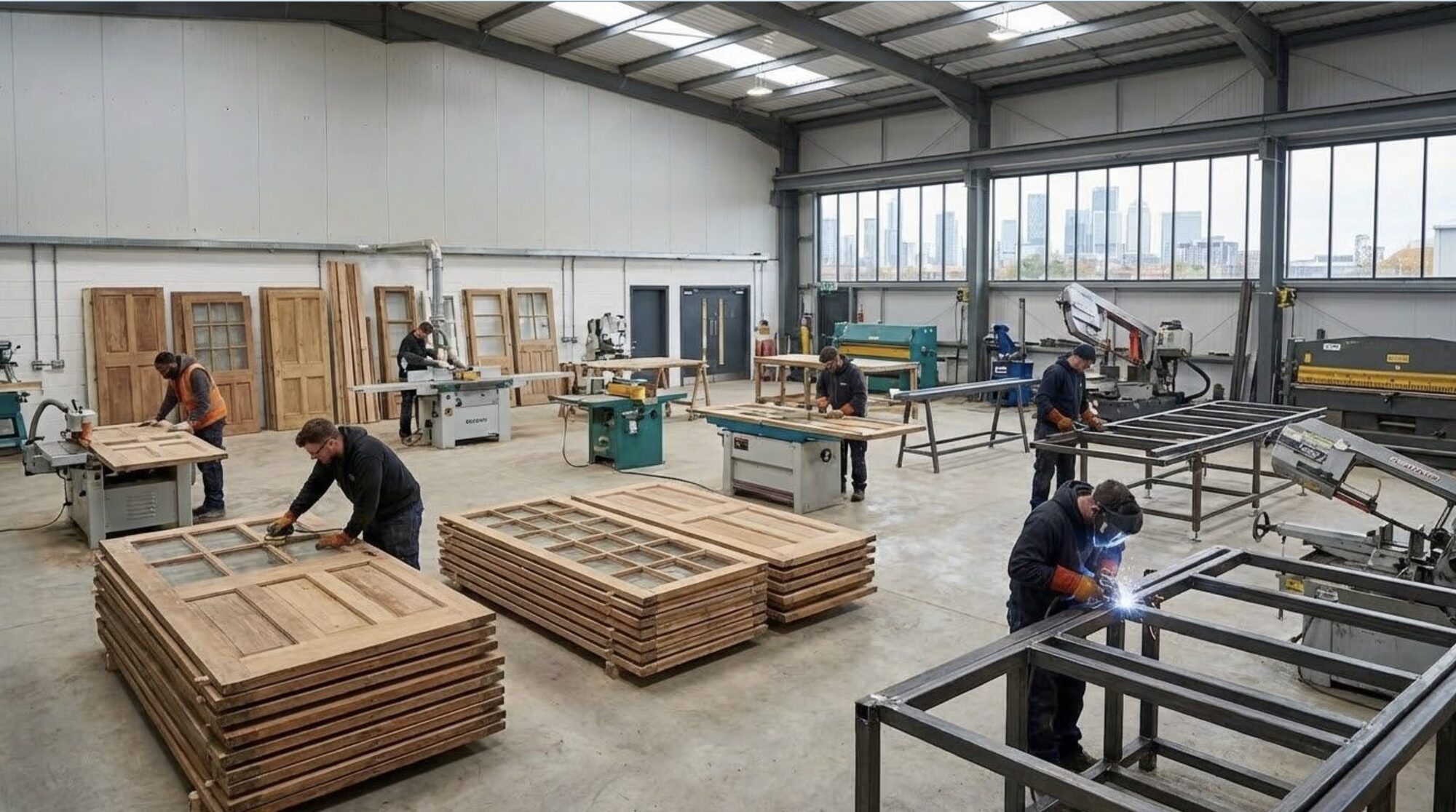
Material is heavy and place-bound — hauling it across the country destroys the advantage. Circular construction is regional, or it is nothing. Yet so far almost nothing exists regionally: no facility, no certified process, no trained trade.
Local, hands-on, with the right facility and the right trades — and industrial where things repeat. That is more sustainable and needs an entirely different set-up. A campus like this also starts smaller than a factory — lower upfront investment, faster to adapt and repeatable in a decentralized way. That's exactly why Orange Hands exists.
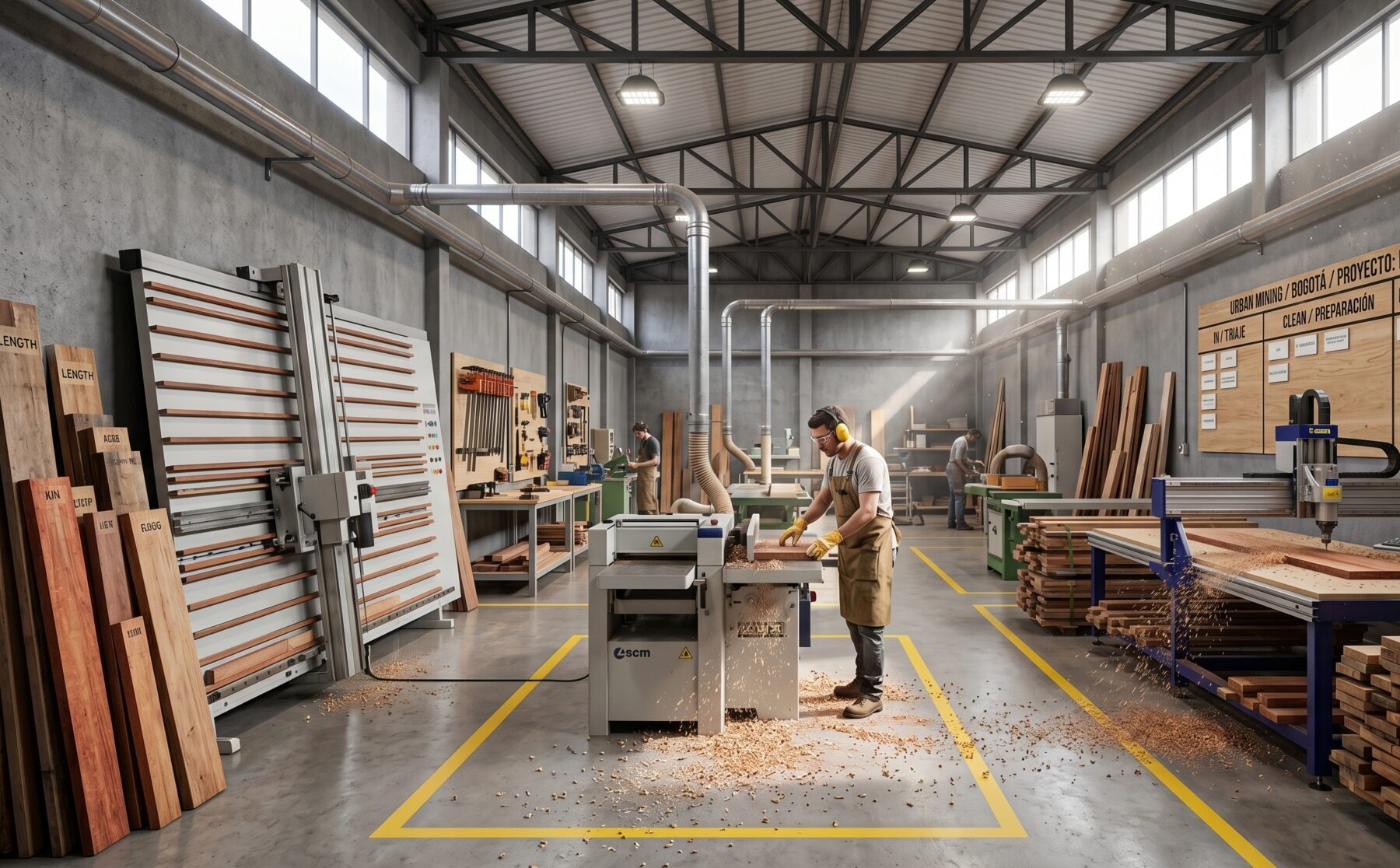
As a renewable, carbon-storing material, timber is increasingly replacing concrete and steel worldwide — in Germany, almost every fourth new home is already built in timber. Colombia, too, wants to build more with wood. But the market can't deliver: about half the demand goes unserved, and the gap sits precisely in processing — panels and furniture are imported, yet technically dried, dimensionally stable sawn timber can neither be bought nor imported. What is sold is wet wood ("madera verde") without quality standards, much of it from illegal sources.
Sources: FAO Outlook 2050 (2022) · Timber Construction Germany (2024) · Fedemaderas/Portafolio (2022) · UN Comtrade (2024) · Minambiente/ONF — evidence on request.
From today's real material streams, step by step, grows a campus that supplies the missing links: upgrade, manufacture, verify — all in one place. Deliberately regional, as a model for further cities. Click through the zones.
Orange Hands is working at full speed toward realization — possible locations, strategic partners, solid financing, the necessary certifications and licenses — and much that is taking shape right now.
What we're working on so the loop works locally — step by step with the campus. Here's the whole picture at a glance.
An end-to-end process turns a recovered component into a specifiable, tested and documented product:
"Used" becomes real value — the value isn't in the old part but in what we add: used → documented → tested → upgraded → verifiable.
Demolition and offcut timber is sorted, tested and worked up into high-quality building products — instead of being shredded or burned. This is the differentiating value creation: waste wood becomes building material again, with a measurable CO₂ advantage.
→ The wood stream in our studyEvery component gets a material and component passport (origin, condition, dimensions, photos). Where needed, we test physically — e.g. windows for wind and water tightness. This turns "used" into a specifiable, verifiable product.
→ More on proofThe plan: all tested components — from our own recovery and delivered by partners — will come together in one place, the Orange Hands Re-Use Store: curated, classified, documented and ready for pick-up, physical and online. Emerging with the campus.
In the long run the campus becomes an open place of learning: coworking, café, training and vocational education — Re-Use and sustainable construction for everyone, explicitly including women and small businesses.
→ More on the Open CampusWe're in the concept phase — all building blocks are in preparation. First we're clarifying the framework conditions (licenses, certificates). And we are building sales and partnerships now: we are already talking to pilot clients and partners — book a conversation →
Professionals can't install untested material without documentation. Only proof makes a recovered component specifiable and plannable — the four building blocks:
Material & component passport: origin · condition · dimensions · photos — traceable
Physical testing where needed, e.g. windows for wind and water tightness — tested rather than claimed quality.
Norms & standards: NTC · FSC Chain of Custody · EPD — specifiable and traceable
Warranty or guarantee elements where possible — plus points toward LEED · EDGE · CASA and ESG/CO₂ proof
And the tailwind is growing: Ley 2450/2025 introduces Colombia's first binding acoustic requirements for buildings, Res. 472/2017 raises the on-site reuse quota step by step from 2 to 30 %, Res. 0194/2025 tightens energy-saving obligations — and Colombia ranks No. 2 worldwide in EDGE certifications, with banks offering interest benefits for certified projects.
Our target customers are sustainability-driven. The same model creates value on several sides:
A building facing renovation or demolition becomes documented material value; and for new builds, tested, verifiable Re-Use components that pay into certifications and green finance. (material in & out)
Specifiable, tested and documented Re-Use components with a material passport — tangible in the showroom, plannable in the project. Points toward LEED · CASA · EDGE.
Buildings and branches that deliver on what the sustainability report promises: documented, verifiable fit-out with local value creation — Made in Bogotá.
Sustainable, high-quality materials with origin and story — quality you can see, touch and stand behind.
Construction is the largest consumer of raw materials and producer of waste — that's exactly where we come in. We can't quantify the total savings yet, but the direction is clear. What a single part already achieves:
Avoids the manufacturing emissions of a new window and keeps frame, glass and fittings out of landfill — reinstalled instead of newly produced.
Saves valuable wood and the carbon footprint of new production — a component that often lasts decades stays in the loop instead of in the skip.
Takes pressure off scarce, partly illegal timber sources: instead of felling new trees, we raise existing wood to its highest use.
Examples are illustrative — orders of magnitude, not individual measurements.
In its research arm, Orange Hands is developing the Industrialized Circular Audit (ICA) — a scalable method to prove the CO₂ savings of reused and refurbished components in an audit-proof way, and make them verifiable for green-building certifications (LEED · DGNB · EDGE).
Local, modern jobs in craft, refurbishment and the circular economy — value creation that stays in the city.
New occupations and continuing education, explicitly including women — modern workshops bring young people back into training.
An open living lab: standards, training and a transferable model for further cities.
Which materials really exist? Which processes work? Which tools, machines, occupations or training are missing? Which standards make Re-Use plannable? Orange Hands studies the operational side of Urban Mining and circular construction — and publishes the results.
We act locally — and think big: the same gap exists in every growing city. Because the rules apply nationwide (Resolución 1257), the model is transferable.
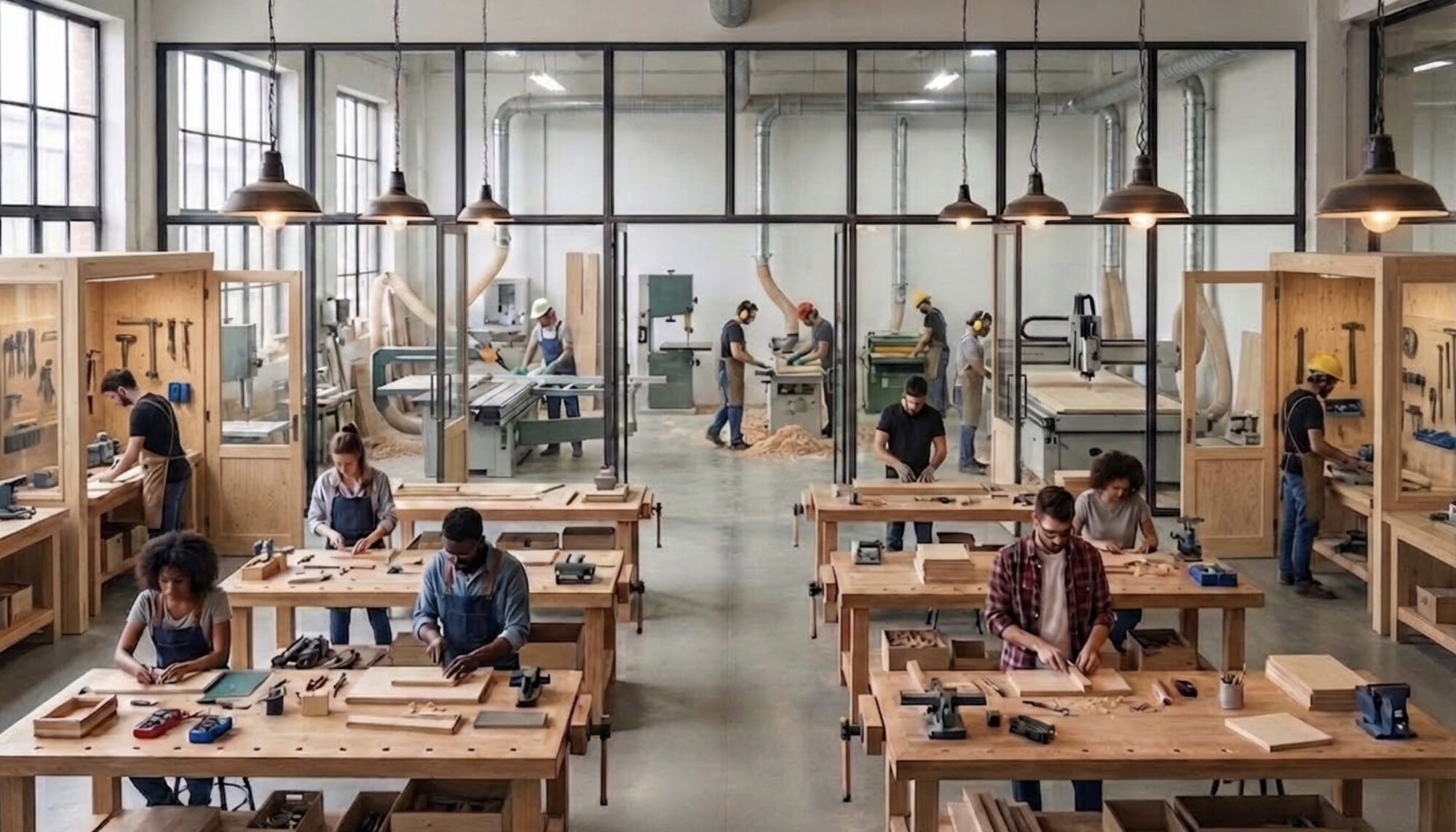
The bigger lever isn't efficiency, it's access. In the long run, Re-Use and sustainable building and fit-out should become feasible for everyone — for small businesses and tradespeople, explicitly including women. This is also where various training and continuing-education themes will take root, and material recovery turns into new skills and local opportunity.
This combination drives Orange Hands: someone who carries the vision and someone who knows climate policy and institutions. For fundraising, public funding and legal matters, we work with experienced partners.
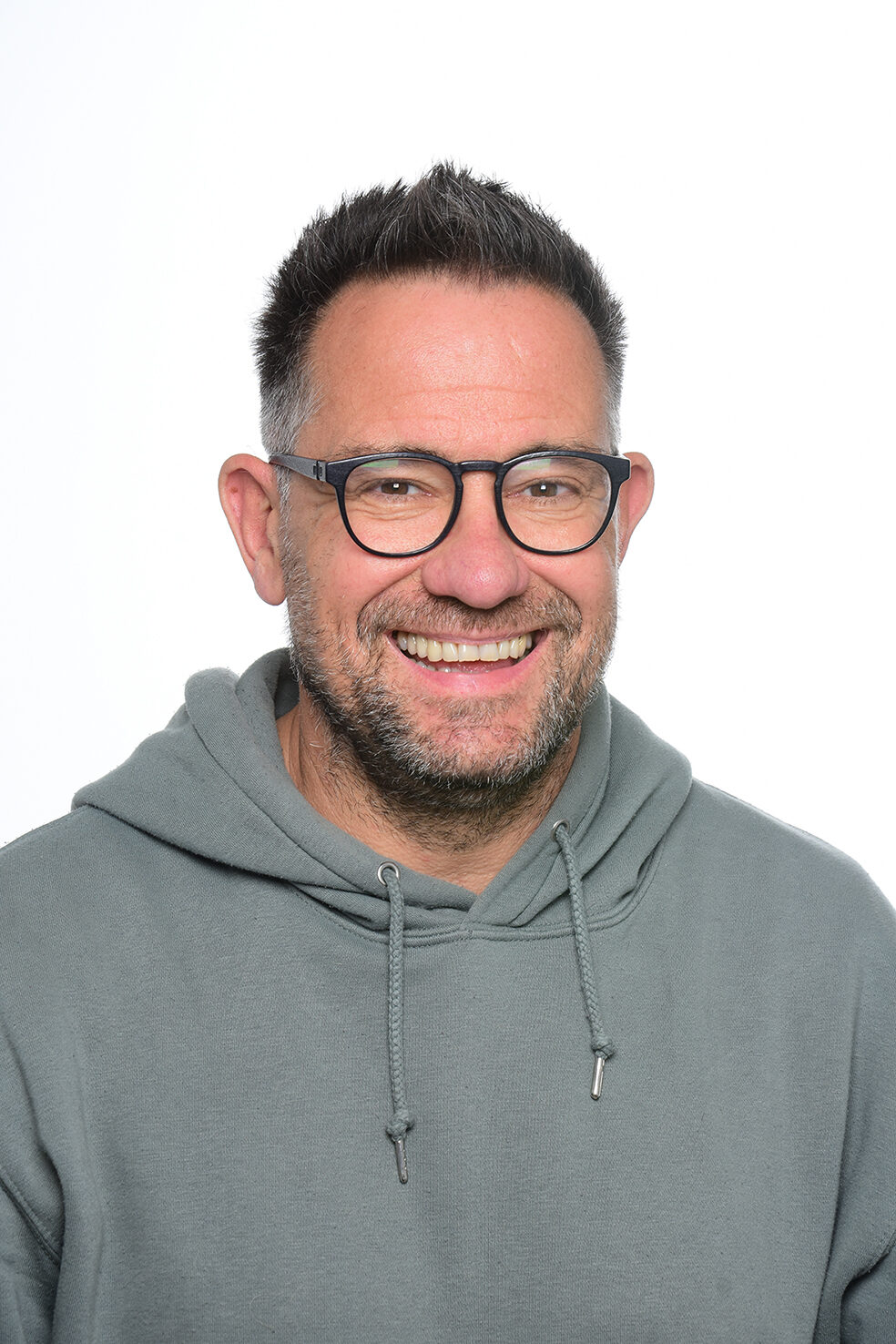
"It's not about making something you can see, but something you can imagine."
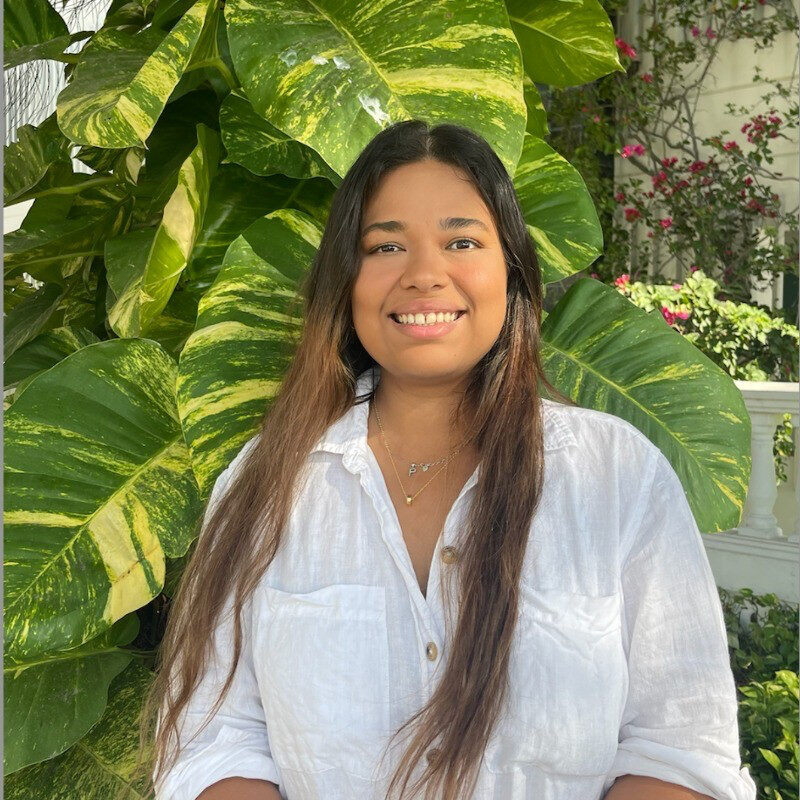
We're growing. Step by step, we are building a team of around 35 to 40 people. We'll post specific roles shortly. Until then, we welcome speculative applications — ideally with a line about what you'd like to build at and with Orange Hands: jens@orange-hands.com
New reports, studies and updates — straight to your inbox.
Double opt-in · unsubscribe anytime · see our Privacy Policy.